
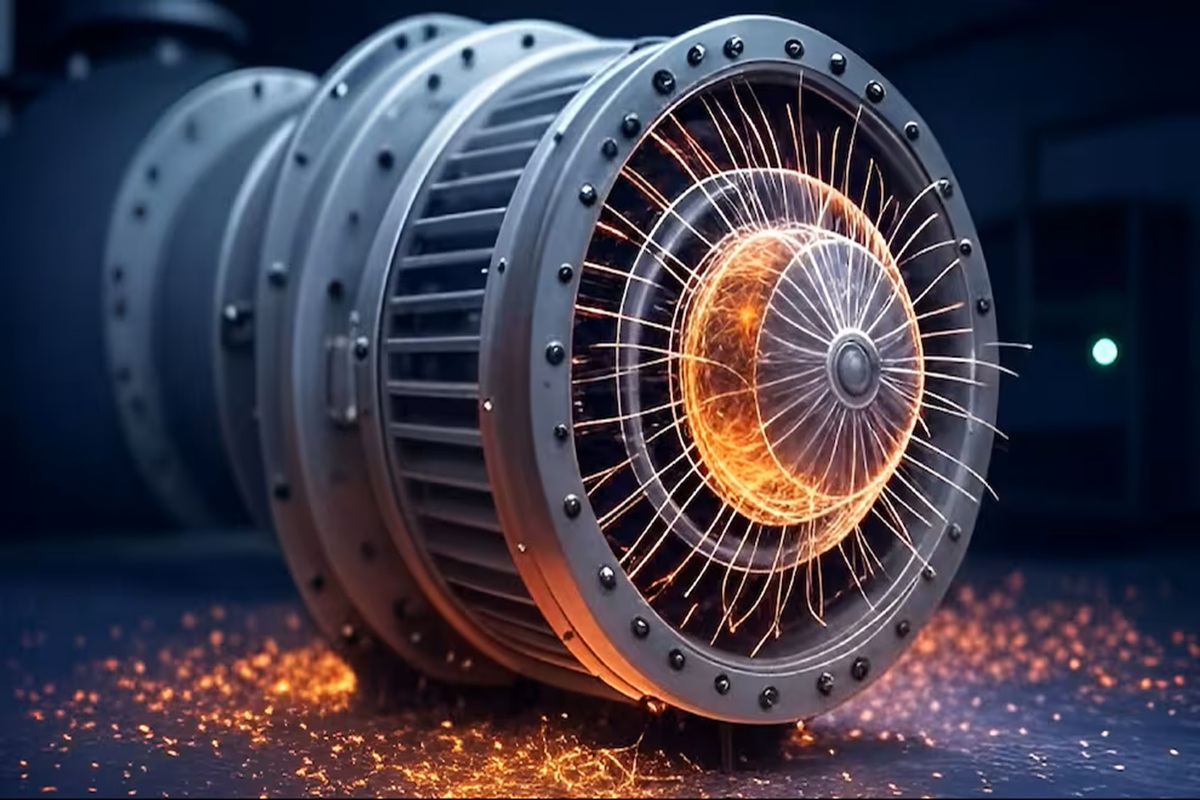
A new propulsion system will enable unprecedented speeds in space and shorten journeys to planets in the solar system. In a technological and scientific leap that promises to transform space exploration, Russian state-owned company Rosatom has developed a prototype electric plasma engine based on a magnetic plasma accelerator. The new engine would be capable of drastically reducing the travel time to Mars from almost a year to just 30 to 60 days, compared to the six months it would take with current technology, with potential for future manned round-trip missions.
Plasma engine: what’s new in space propulsion
The engine works by accelerating charged particles between two electrodes under high voltage. The interaction between the electric current and the generated magnetic field expels these particles, creating a constant thrust that propels the spacecraft at speeds much greater than those achieved by conventional chemical engines. Its specific impulse exceeds 100 kilometres per second, and the thrust force is at least 6 Newtons, with an average operating power of approximately 300 kilowatts in pulsed-periodic mode.
This technology not only increases the speed of spacecraft, but also achieves much greater fuel efficiency, reducing the amount needed by up to ten times compared to traditional chemical systems. In addition, by enabling faster missions, it reduces the risk of prolonged exposure to cosmic radiation that astronauts face in deep space.
Testing infrastructure and the future of space travel
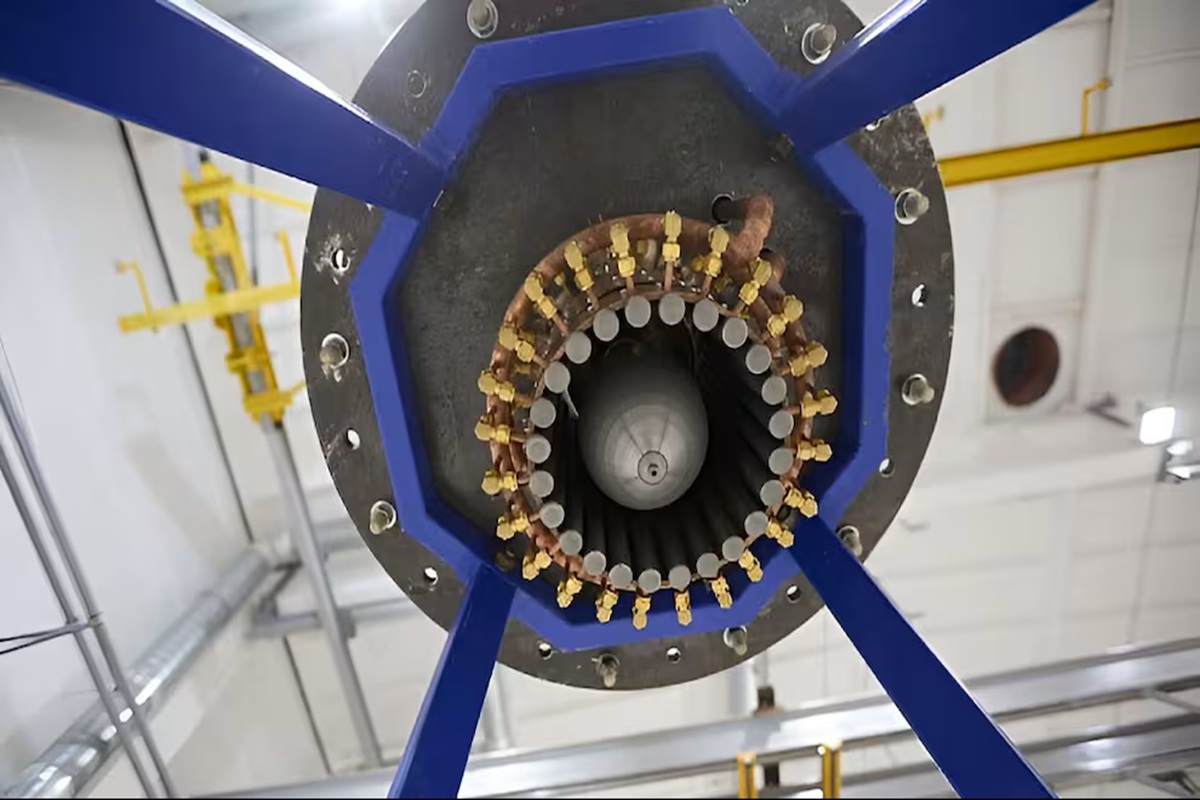
Rosatom is currently building a large-scale experimental infrastructure at its facility in Troitsk, which includes a vacuum chamber 4 metres in diameter and 14 metres long. This chamber, equipped with advanced vacuum pumping and thermal management systems, allows space conditions to be simulated in order to test the engine and ensure its operation.
The engine is an integral part of Rosatom’s plans to develop nuclear space tugs, advanced propulsion vehicles that could facilitate interplanetary exploration, significantly reducing the costs and operational times of subsequent missions.
The first prototype tests in space are expected to be carried out around the year 2030.
Technological challenges
To make the trip to Mars in 30 days, a spacecraft must reach an average speed of around 310,000 km/h. This leap in speed is a paradigm shift in space technology. Although chemical rockets remain vital for overcoming Earth’s gravity and reaching initial orbit, the plasma engine aims to become the primary system for interplanetary travel.
However, this promising development is not without its challenges. Some doubts remain about mass production capacity and maintaining the promised specifications, especially in the context of large-scale budgets and testing. In addition, the future integration of nuclear technology into these systems could take these capabilities even further, making extended autonomy in space missions possible.
Mars is now closer thanks to Russian engineers and their innovative engine.
The impact on humanity and the next steps
The breakthrough by Russian scientists represents a significant technological leap, with implications not only for the exploration of Mars, but also for the establishment of human bases and colonies on other planets. Faster and safer space travel could open the door to a new era marked by human exploration and expansion beyond Earth.
Rosatom has taken a major step forward with the creation of the prototype, and the next stages of testing will be crucial to validate its real applicability in manned space missions. If realised, reaching Mars in just one month could cease to be science fiction and become a tangible reality in the near future.
This new technology has the potential to radically transform our ability to explore space and represents a strategic advance for humanity in the race to colonise Mars and other interplanetary destinations.